


Why does my electricity keep tripping? Most often, the cause is an overloaded circuit, a faulty appliance, damp or damaged wiring. The trip is deliberate. Your consumer unit has sensed a fault and cut the power to protect you. Resetting it once is sensible. Resetting it repeatedly is risky, because electrical faults remain a major source of home fires: Electrical Safety First reports 13,537 accidental electrical dwelling fires in 2024/25. This guide explains the causes, the safe checks, the mistakes to avoid and when to call a qualified electrician.
Safety Warning: When to Stop and Call Now
Switch off at the main switch if it is safe to reach, then call an electrician if you notice a burning smell, scorch marks, buzzing, a hot or discoloured consumer unit, water near electrics or a switch that will not stay reset. Robinz Electrical provides 24/7 emergency electrical services.
Quick Answer: Why Does My Electricity Keep Tripping?
Usually because a circuit is carrying too much load or leaking current to earth. The common culprits are:
- An overloaded circuit
- A faulty appliance
- Damaged flexes, plugs and sockets
- Damp or moisture
- A faulty immersion heater, shower or cooker
- Damaged or ageing wiring
- An old consumer unit
If it trips with everything unplugged, suspect the wiring, a fixed appliance or the protective device itself.
What Does It Mean When Your Electrics Trip?
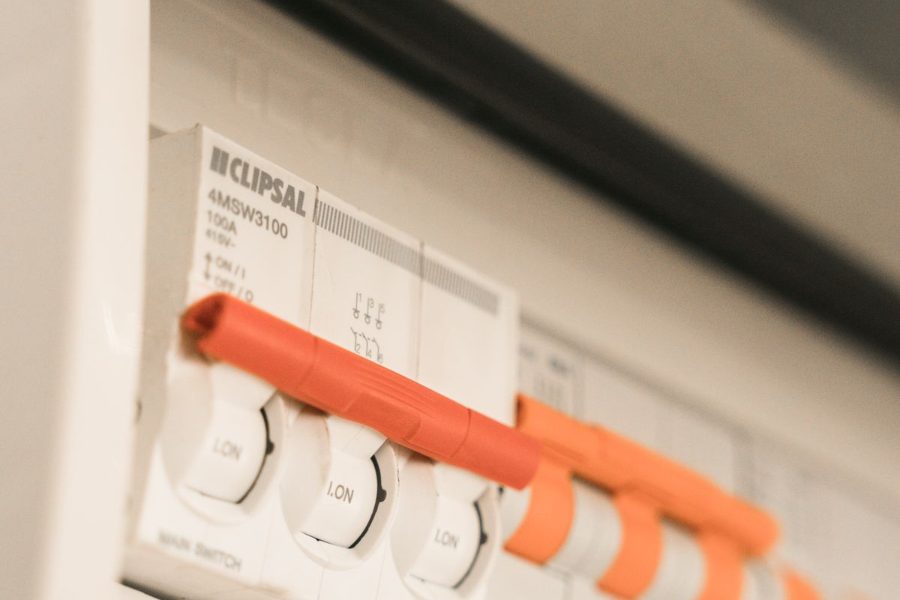
It means a protective device in your consumer unit, often called a fuse box, has switched a circuit off to prevent shock, overheating or fire. You will usually see three types:
MCB (miniature circuit breaker)
Guards against overload and short circuits. If one MCB drops, the fault is on that circuit.
RCD (residual current device)
Detects current leaking to earth, such as through damp or damaged insulation. An RCD that keeps tripping is usually reporting an earth fault.
RCBO
Combines both on one circuit, so a fault switches off only that circuit rather than half the house.
That is why a trip switch that keeps tripping is a warning, not a nuisance.
10 Common Reasons Your Electrics Keep Tripping
If you are asking why my electric tripping, start with these ten causes.
1. Overloaded circuit
Too many high power items on one circuit will trip the MCB. Kettles, toasters, heaters and washing machines running together are typical. If it happens at the same time each day, such as while cooking, overload is likely. Move heavy appliances to different sockets and avoid multiway adaptors.
2. Faulty appliance
One faulty appliance is a very common cause of a tripping plug or socket. Worn elements, motors and cables can leak current. Electrical Safety First's England data shows faulty appliances and leads caused 25.9% of the accidental electrical dwelling fires it counted, and misuse caused 46.5%. Unplug suspects rather than just switching them off.
3. Damaged flexes, plugs and sockets
Damaged insulation lets current escape. Look for cracked plugs, scorch marks, pinched or chewed flex and loose sockets. Extension leads run under rugs or through doorways are frequent offenders. Stop using anything damaged.
4. Damp and moisture
A small amount of water can trip an RCD. Outdoor lights, garden sockets, bathrooms and condensation in kitchens are typical sources. If it trips in rain or after showers, moisture is likely, and damp autumn and winter weather makes this more common.
5. Short circuit
This happens when live and neutral conductors touch, causing a sudden surge. The MCB trips instantly, sometimes with a bang or flash. If it trips the moment you reset it, leave it off and call an electrician.
6. Earth fault
This is current leaking to earth, which is exactly what an RCD is built to detect. Damaged insulation, damp or a faulty appliance can all cause it. It is often intermittent, so it is hard to trace without proper testing.
7. Faulty immersion heater, shower, oven or cooker
Fixed heating appliances are a common hidden cause. Elements can crack or corrode and leak to earth, especially where limescale builds up in hard water areas. If it trips when the shower or hot water runs, that is a strong clue. This needs a qualified electrician.
8. Damaged or ageing wiring
Rodents, nails through cables, poor DIY and old rubber or fabric insulation can all cause leakage or shorts. This often trips the power with nothing in use. Depending on the damage, the answer may be a repair, a partial rewire or a full rewire — our guide to the warning signs a house needs rewiring covers what to look for.
9. Old or overly sensitive consumer unit
Older units may have rewireable fuses, no RCD protection or an ageing RCD that trips too easily. If your fuse box (consumer unit) keeps tripping and it is an older board, that is worth assessing in its own right. A new EV charger, heat pump or solar system can also add demand an older setup struggles to handle — see our electrical services for those installations. A modern unit with RCBOs isolates faults far better. See our guide to fuse board upgrades.
10. Surges, storms and supply problems
Lightning, storms and network faults can trip your supply. If neighbours are also without power, the problem is probably outside your property. You can call 105 free of charge to reach your network operator.
Which Switch Tripped? What It Tells You
The switch that dropped narrows down the problem.
- One MCB: an overload or fault on that circuit.
- RCD: an earth fault or leakage on a circuit it protects.
- Half the property: a split load unit with two RCDs.
- Everything including the main switch: check for a supply problem.
Keep a simple trip diary. Note the time, the weather and what was in use. A pattern, such as rain, the morning shower or evening cooking, can save an electrician a great deal of diagnostic time.
How to Find the Cause Safely, Step by Step
Unplug everything on the affected circuit, reset, then reintroduce items one at a time.
- Check for warning signs first: smell, heat or water.
- Note which switch has tripped.
- Unplug everything on that circuit.
- Reset the switch.
- Plug items back in one at a time.
- Stop using any item that trips it.
If the whole board is off, switch all MCBs off, reset the RCD, then switch the MCBs back on one at a time. The circuit that trips the RCD is the faulty one, so leave it off.
What You Should Never Do When Your Electrics Keep Tripping
Never hold a switch up or tape it. Never keep resetting it repeatedly. Never swap a breaker for a higher rated one. Never open the consumer unit cover. Never touch electrics with wet hands. Never ignore a trip because it only happens sometimes.
Still tripping after the checks above? Request a free, no-obligation quote and we'll find the fault properly.
Is It Dangerous If Your Circuit Breaker Keeps Tripping? When to Call an Electrician
Yes, it can be. A breaker that keeps tripping, or a breaker constantly tripping, is reporting a fault that does not disappear when the power returns. In England, 53.4% of accidental domestic fires in 2018/19 had an electrical origin, according to Electrical Safety First. Call an electrician if:
- It trips with nothing plugged in
- It will not stay reset
- There is a burning smell, scorch marks or buzzing
- The consumer unit is warm or discoloured
- Water has reached sockets or fittings
- Your wiring is old or you still have rewireable fuses
Our team handles repairs and fault finding across Hertfordshire, Bedfordshire and Essex.
What an Electrician Will Check and Test
A qualified electrician traces the fault circuit by circuit with proper test equipment. This includes insulation resistance testing to find leakage, RCD trip time testing, checks on connections inside the consumer unit and inspection of sockets, switches and fixed appliances. Where the cause is unclear, an EICR gives a full picture. Learn more about our electrical inspections and testing.
How to Stop Your Electrics Tripping Again
Fix the cause first, then reduce the risk. Spread heavy appliances across circuits, avoid daisy chained extension leads and replace damaged flexes and ageing appliances. Keep outdoor and bathroom electrics dry. Press your RCD test button regularly, following the interval printed on your consumer unit label, and it should trip immediately. If the unit is old, upgrading it is the most dependable long term fix.
How Often Should You Have an Electrical Inspection?
For owner occupied homes, industry guidance commonly suggests an inspection roughly every 10 years. For rented homes in England, the rule is firmer: landlords must have installations inspected and tested by a qualified person at least every 5 years, and breaches can bring financial penalties of up to £30,000 (see the GOV.UK guidance on electrical safety standards in rented homes). Landlords are responsible for the fixed installation, while tenants are responsible for their own appliances. All work should meet BS 7671, the UK wiring regulations.
Frequently Asked Questions
Why does my electric keep tripping when everything is off?
Something is still connected or leaking. Fridge freezers, boilers, immersion heaters and hidden wiring faults stay on the circuit even when nothing seems to be running, and damp can do the same. Have the circuit tested.
Why does my electricity trip when it rains?
Water is probably entering outdoor lights, garden sockets or a damaged fitting. Keep away, leave the circuit off and have it inspected.
Can I keep resetting the trip switch?
No. Reset once to carry out the safe checks above. If it trips again, the cause needs finding, not ignoring.
Does my fuse box need replacing if it keeps tripping?
Not always, because the fault is often elsewhere. An old unit without modern RCD protection should still be assessed, and testing will show whether the unit or the circuit is at fault.
More answers in our electrical FAQs.
Need Help With Tripping Electrics? Contact Robinz Electrical
If you are still wondering why my electricity keeps tripping, our qualified electricians can find and fix the cause safely. Robinz Electrical is a family run company serving Knebworth, Woolmer Green, Stevenage and across Hertfordshire, Bedfordshire and Essex. We offer fault finding and repairs, fuse board upgrades, electrical inspections and 24/7 emergency electrical services. See our recent work, then call or WhatsApp 07383 035007, or request a free, no obligation quote today.
We're NAPIT registered, and every job is certified to BS 7671.
Sources
- Electrical Safety First, Policy and research (13,537 fires in 2024/25; 53.4% in 2018/19): electricalsafetyfirst.org.uk/policy-and-research
- Electrical Safety First, Statistics for England (faulty appliances and leads 25.9%, misuse 46.5%): electricalsafetyfirst.org.uk — statistics for England
- GOV.UK, Electrical safety standards in the private and social rented sectors: gov.uk guidance
- Telford and Wrekin Council, Electrical safety standards (penalty up to £30,000): telford.gov.uk
Last updated: 15 October 2026 · Reviewed by the Robinz Electrical team, NAPIT-registered electrical contractors.